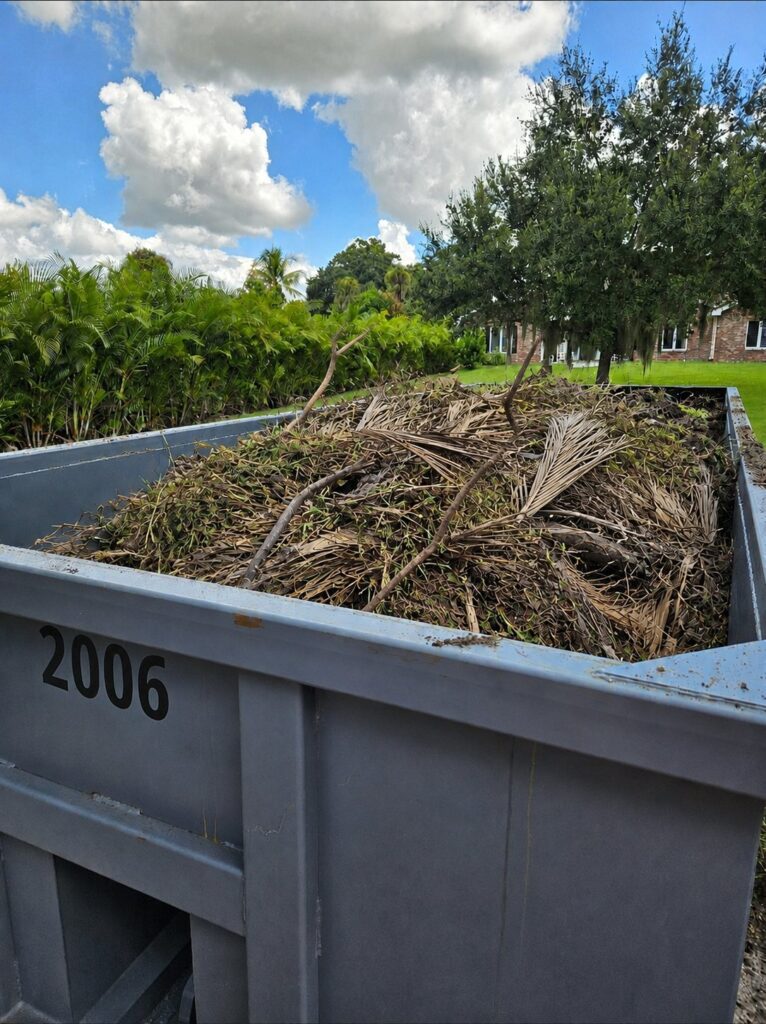
Horticulture and Yard Waste Dumpster Rental
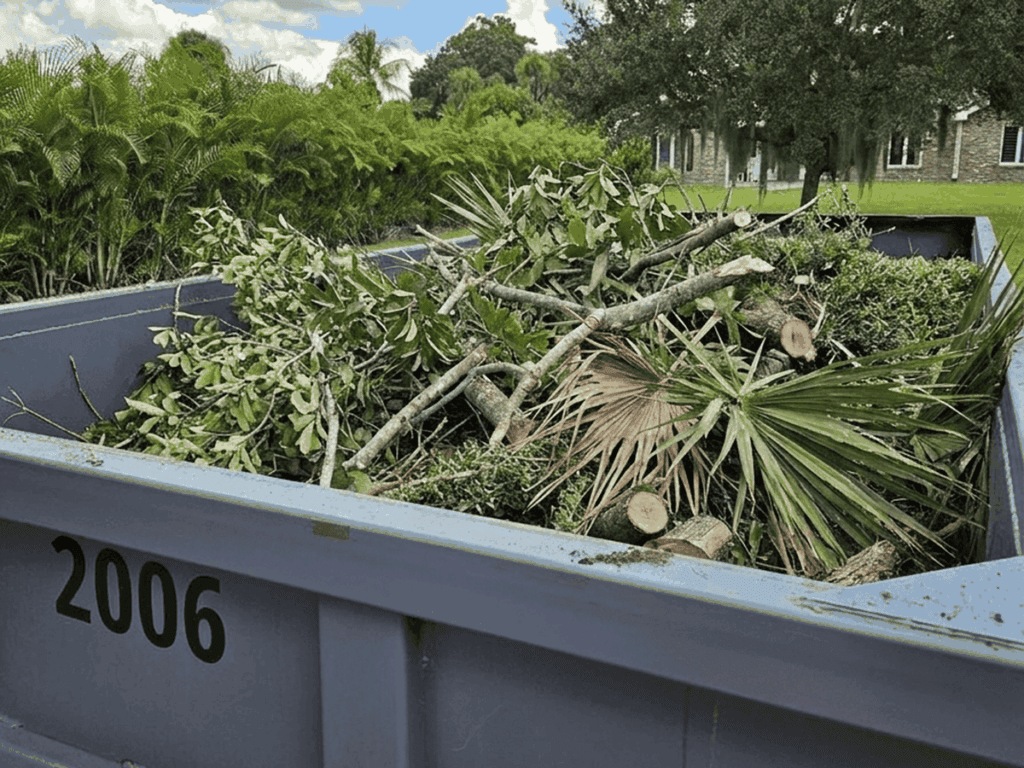
Brush, Limbs and Green Waste
Maxim Disposal runs horticulture containers across Southwest Florida — land clearing, tree work, palm fronds, limbs, brush, hedge trimmings and yard waste. For landscapers, tree services, property crews and homeowners doing a real cleanup.
Green waste goes to a different facility than construction debris, so it is priced separately. Every rental includes 30 days, and we schedule around how the crew actually works. Describe the job and we will price it on the phone.
Sizing a Can for Green Waste
Brush is bulky and light, so these loads run out of volume long before they run out of weight — the opposite of concrete. Most crews size up rather than down, because limbs do not compact the way people expect.
Sizes for Brush and Yard Waste
20 yard. Hedge and palm work, a big residential cleanup, or a single tree removal. 2 tons included.
30 yard. Land clearing, multiple trees, storm cleanup and ongoing landscape crews. 3 tons included.
Cutting limbs down before they go in makes a real difference — long branches bridge across the can and leave it half empty.
What Counts as Horticulture
Limbs, branches, trunk sections, palm fronds, brush, hedge and shrub clippings, leaves and general green waste.
Dirt, sod and soil are the thing to watch. They are heavy, and a load of clean brush that arrives full of root balls and soil can change how it is classified at the scale. If the job produces both, call (239) 470-8525 and we will tell you whether to separate it.
No construction debris in a horticulture can — no lumber, fencing, treated wood, concrete or trash. Those go to a different facility and belong in a construction debris can.
How to Schedule and What to Expect
Three steps, and the can is on the ground.
01
Request a Quote and Delivery
Call (239) 470-8525 and tell us what the job is — hedge work, a tree removal, a lot clearing — and roughly how much material you expect. Same-day delivery is often on the table, next day is routine.
Prepare, Place, and Load Your Dumpster
Pick the drop spot and clear it. We need roughly 60 feet of straight-line room and clearance overhead, which matters more than usual on tree jobs — low limbs over the drop spot will stop a truck. Cut material down before it goes in and load it flat.
02
03
Arrange Pickup and Disposal
Call when you are ready and we haul it to the green-waste facility, where it is processed into mulch and compost rather than landfilled. Your rate covers 30 days, delivery, pickup, disposal and all applicable taxes. The only thing added to every rental is a $30 flat fuel fee, charged once per load — not a percentage that grows with your invoice.
Communities We Serve
We run 26 markets across Southwest Florida, from Marco Island north to Sarasota. Island and barrier destinations — Sanibel, Captiva, Marco Island, Pine Island and Boca Grande — carry a destination fee for bridge access and drive time. Everything else, including the long inland and northern runs, is standard rate.
Coverage Service Areas
Storm work or a lot clearing that also produces structural debris? Keep them separate — mixing construction debris into a green load reclassifies the whole thing. See construction debris, our rates, or call (239) 470-8525.
Frequently Asked Questions About Horticulture Disposal
What landscapers and tree crews ask us.
Small amounts of soil clinging to root balls are normal and expected. A load that is substantially dirt and sod is a different product — it is heavy, and it may not be accepted as green waste at the facility. If the job produces both, call (239) 470-8525 before you start loading and we will tell you whether to split it into two cans.
You do not have to, but it pays. Long branches bridge across the container and leave a lot of empty space underneath, so an uncut load can fill a 30 yard can at maybe half its real capacity. Cutting to roughly the width of the can is the practical rule.
It goes somewhere else. Green waste is processed into mulch and compost at a facility with its own tipping rate, while construction debris goes to a C&D facility. Different destination, different cost, so we price them separately rather than averaging the two and charging everyone the same.
Brush, palm fronds, hedge trimmings, tree limbs, root balls and land clearing debris. It has to be green waste only — no lumber, no fencing, no construction material mixed in, or the load gets reclassified.
Because green waste costs more to dispose of. A 20 yard horticulture can is $575 against $425 for mixed construction debris, and it comes with 4 tons included rather than 2.
You can, but the whole load then prices as the more expensive of the two. If a job produces both, separating them on site is almost always cheaper than sorting it at the scale.
Considerably. Freshly cut palm, wet brush and root balls carry a lot of water, and a load sitting open through a Florida afternoon weighs more at the scale than it did going in. Dry brush and hedge trimmings are light and rarely get near the allowance.