
Pick the Right Can the First Time
Four sizes, four kinds of material, and one question that decides most of it: what is going in the can.
That sounds obvious and it is the part people get wrong. A 30 yard full of roof shingles and a 30 yard full of palm fronds are the same container having two completely different problems. One runs out of weight. The other runs out of room. If you pick a size off volume alone, you will be right about half the time.
This page covers how to size a can, what goes in which one, and what we will not take. If you already know what you are hauling, the four service pages at the bottom go deeper on each one.
Start With the Material, Not the Size
Every load hits one of two ceilings. Either the can gets physically full, or it hits its weight allowance. Which one you hit first is decided almost entirely by what you put in it.
| What you are hauling | What limits you | Where people go wrong |
|---|---|---|
| Concrete, block, brick | Weight, always | Assume it needs to look full. It will not. |
| Roofing, tile, plaster, wet debris | Weight, usually | Rented for volume, billed for weight |
| Mixed construction debris | Volume, usually | Uncrushed bulky items eat the can |
| Brush, limbs, palm | Volume, always | Long branches bridge and leave it half empty |
| Concrete washout | Neither — it is a containment product | Digging a pit instead |
Get that column right and the size question mostly answers itself.
Concrete is the clearest case. A 20 yard can of broken slab reaches its fifteen-ton limit long before it looks full. A properly loaded concrete can sits low. That is not a wasted rental, that is what a correct concrete load looks like — the weight is gone and the volume is still there.
Brush is the mirror image. Limbs do not compact the way people expect. They bridge across the container and leave air underneath. Cutting material down to roughly the width of the can before it goes in is the difference between filling a 30 yard and filling half of one.
Mixed C&D sits in between, and it is the one where telling us the job actually matters. Roofing tear-offs, tile, plaster, dirt and wet debris are heavier than almost anyone guesses. Tell us what the work is and we will size it with you. We are not going to push you into a 30 when a 20 does the job.
Will It Fit — the Dimensions
| Can | Length | Width | Height |
|---|---|---|---|
| 10 yard | 11 ft | 7 ft 8 in | 4 ft 6 in |
| 20 yard | 21 ft | 7 ft 8 in | 4 ft 6 in |
| 30 yard | 21 ft | 7 ft 8 in | 6 ft 6 in |
| 6.5 yard washout | 12 ft | 7 ft 8 in | 2 ft 6 in |
Approximate. Every can is the same width.
Two things fall out of that table, and they answer most driveway questions before you have to ask them.
The 20 and the 30 take up the same ground. Same length, same width. The 30 is two feet taller, not one foot longer. So if a 20 yard fits your driveway, a 30 yard fits it too — the decision between them is about how much you are throwing away and how heavy it is, not about whether it will physically go there.
The 10 yard is the one that fits tight. At 11 feet it is half the length of the other two. If you have a short driveway, a turnaround you need to keep open, or a gate you have to get past, the 10 is often the only can that works — and two pulls on a 10 is a real option worth asking about.
Separately from the can itself, we need roughly sixty feet of straight-line room to set one down, plus clearance overhead. That number, not the container length, is what usually decides a delivery.
The Four Cans
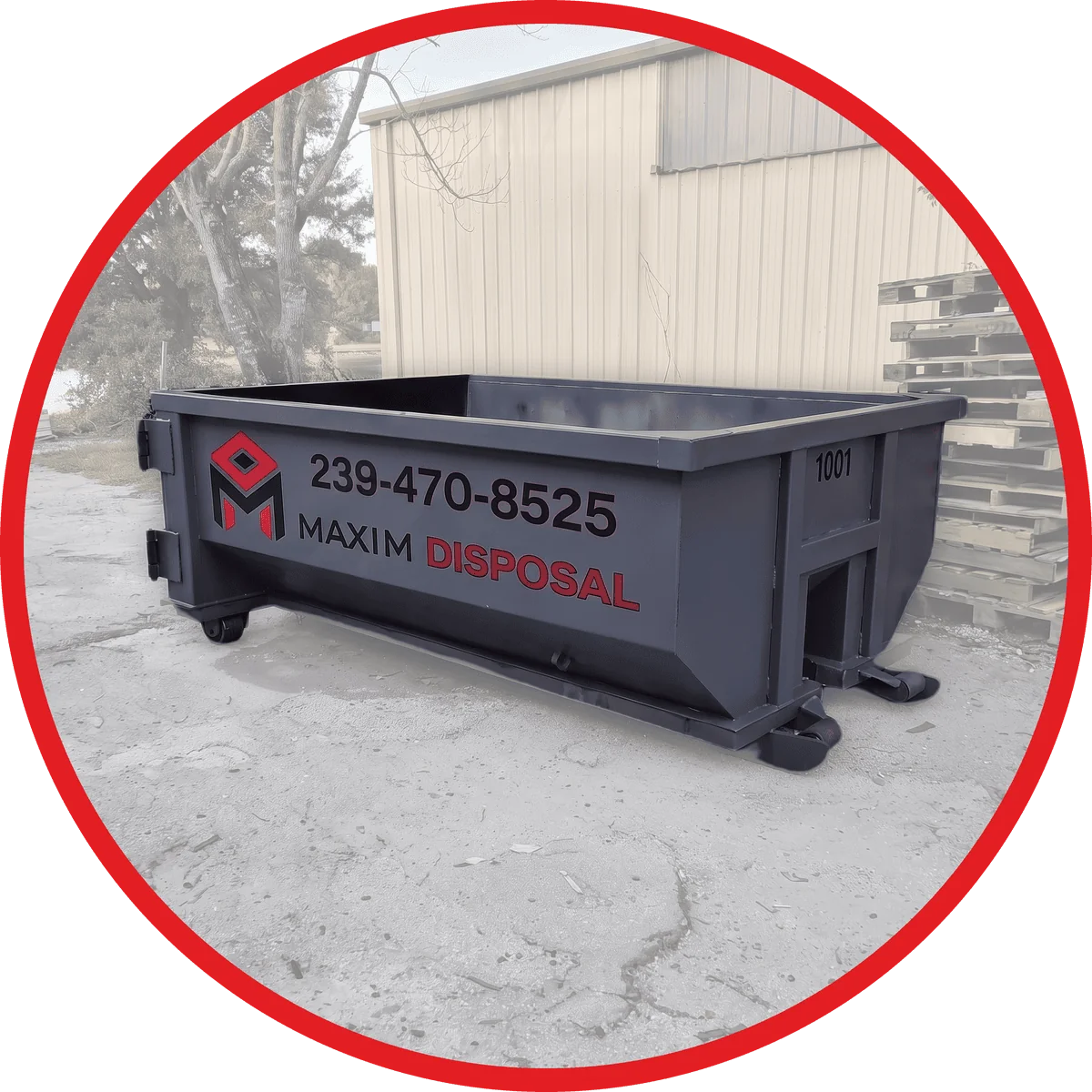
10 Yard — 1 ton
The small one. Single-room remodels, a garage cleanout, a bathroom, a small landscape job. Also the right call for heavy material in small quantity. If you are looking at a 10 yard for bulk, you probably want a 20.
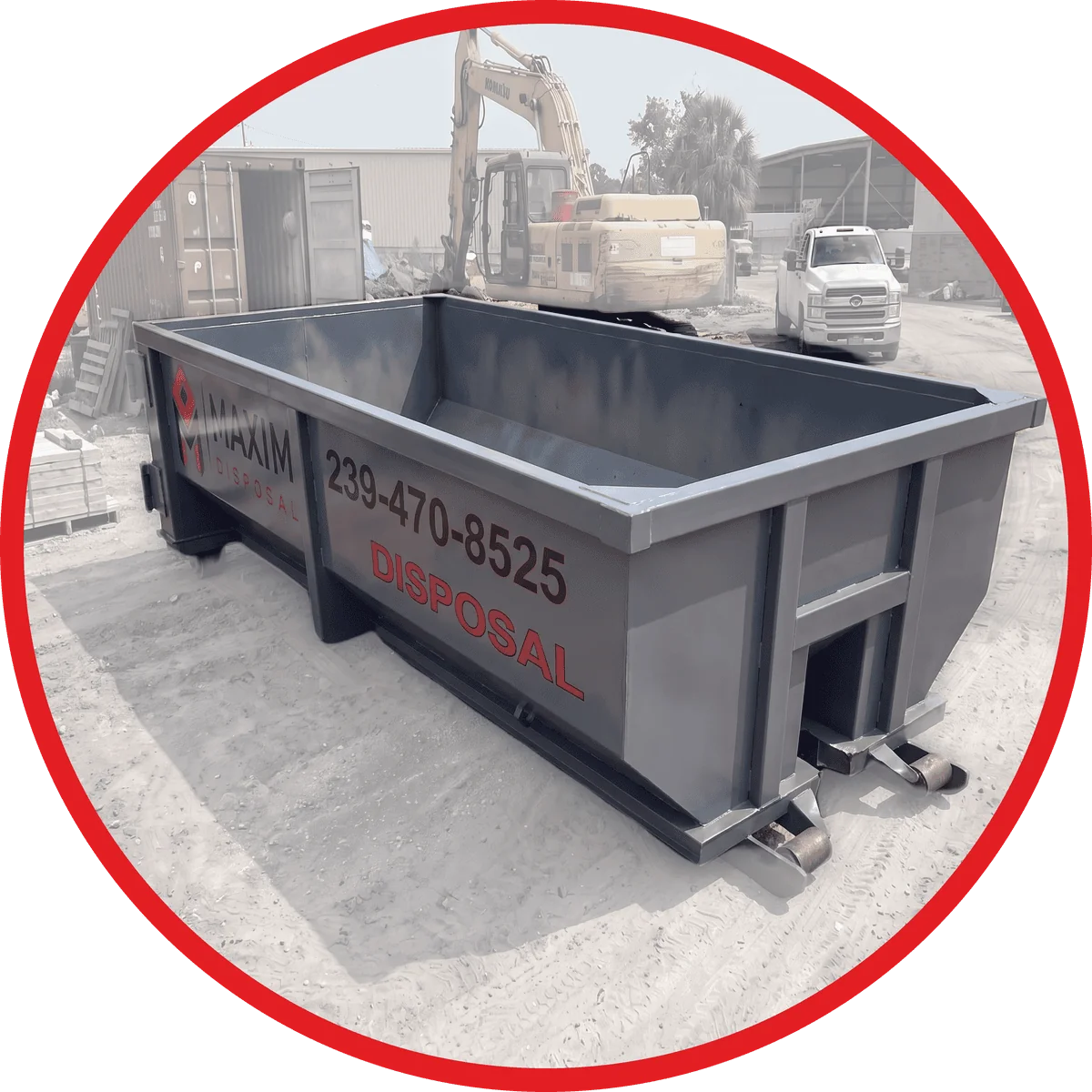
20 Yard — 2 tons
The workhorse. Remodels, roof tear-offs, most residential construction, mid-size cleanups. If you are not sure what you need and nobody has looked at the job, this is usually the honest answer.
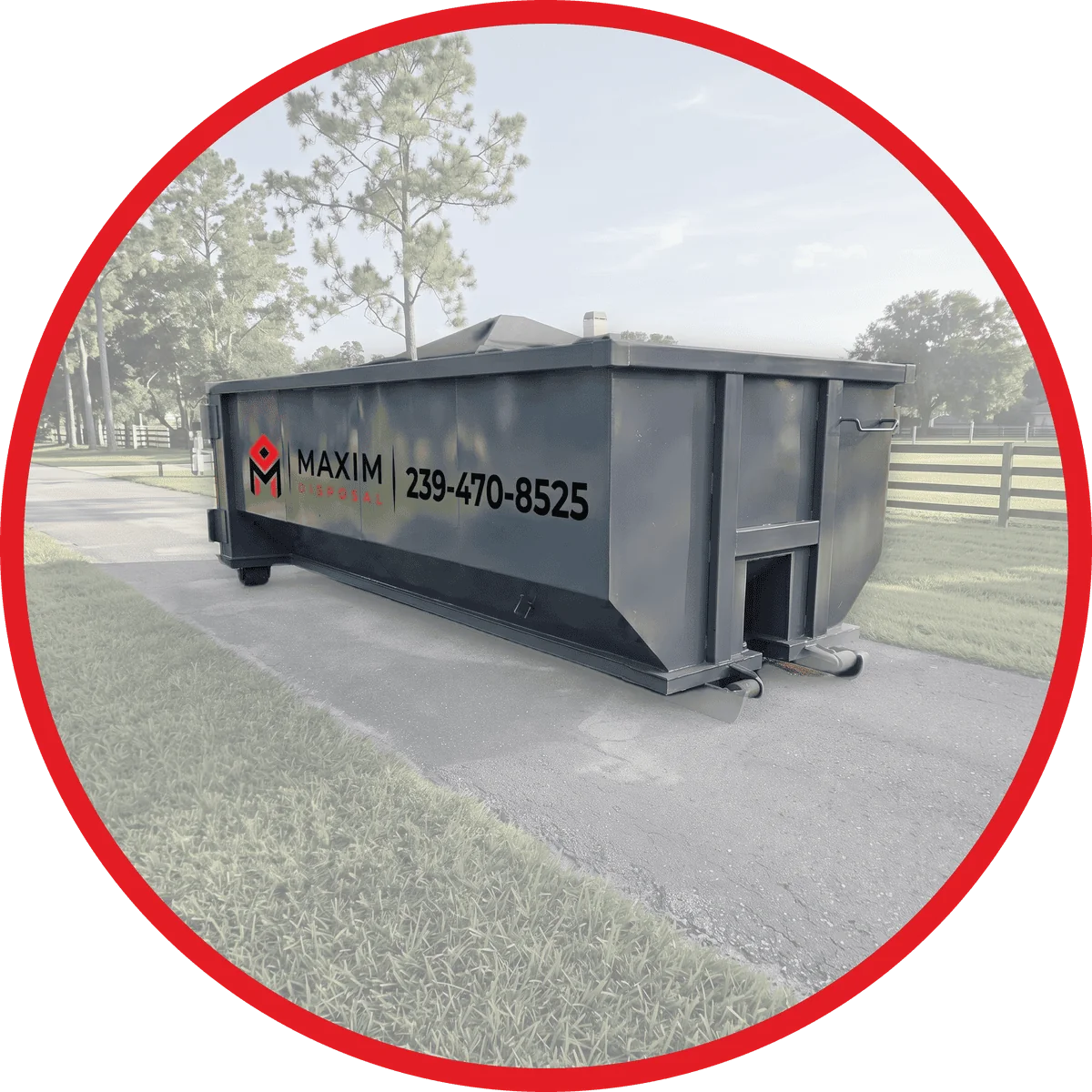
30 Yard — 3 tons
Whole-home renovations, commercial buildouts, demolition, shops throwing off steady volume. About the most container you can still reasonably get on a residential driveway.
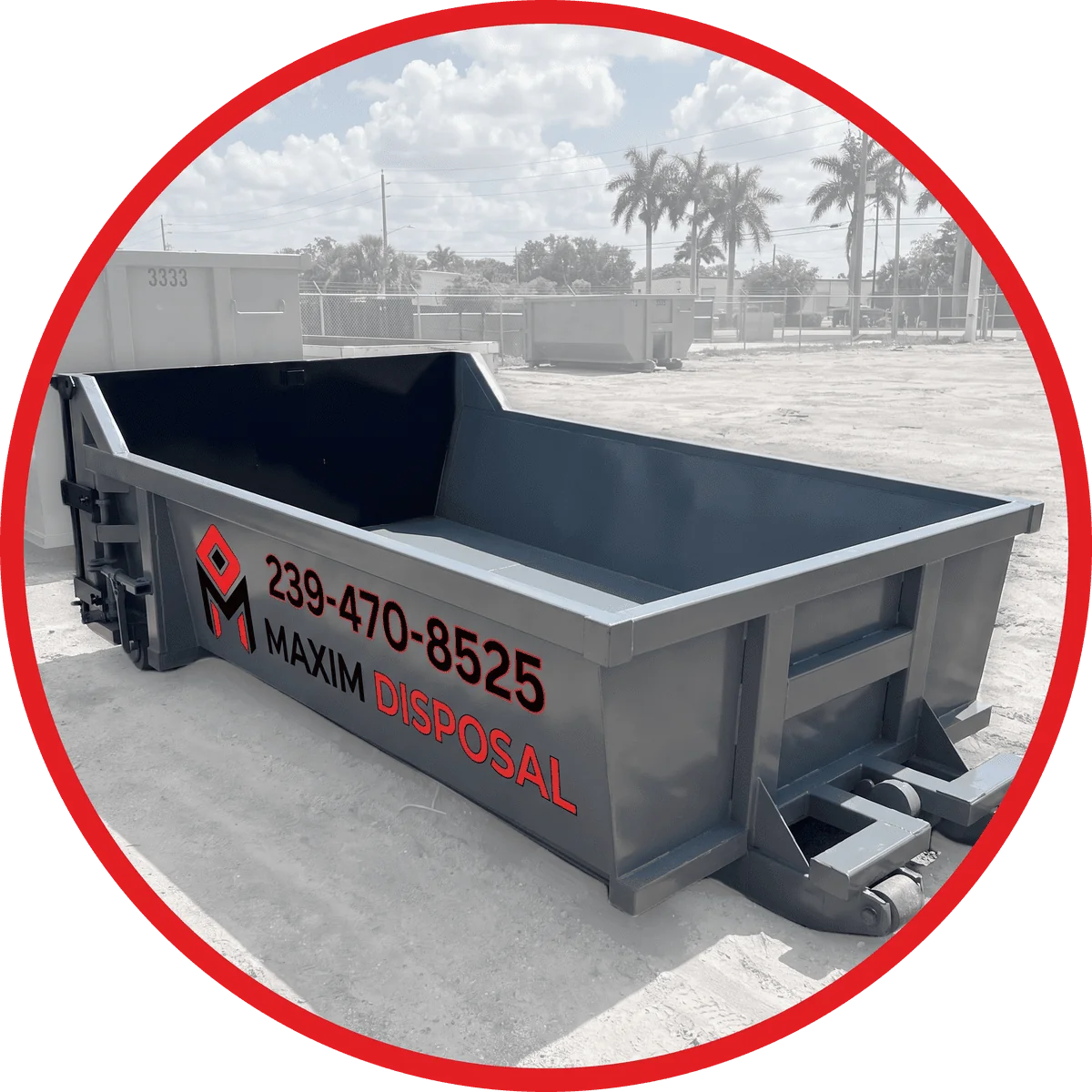
6.5 Yard Washout
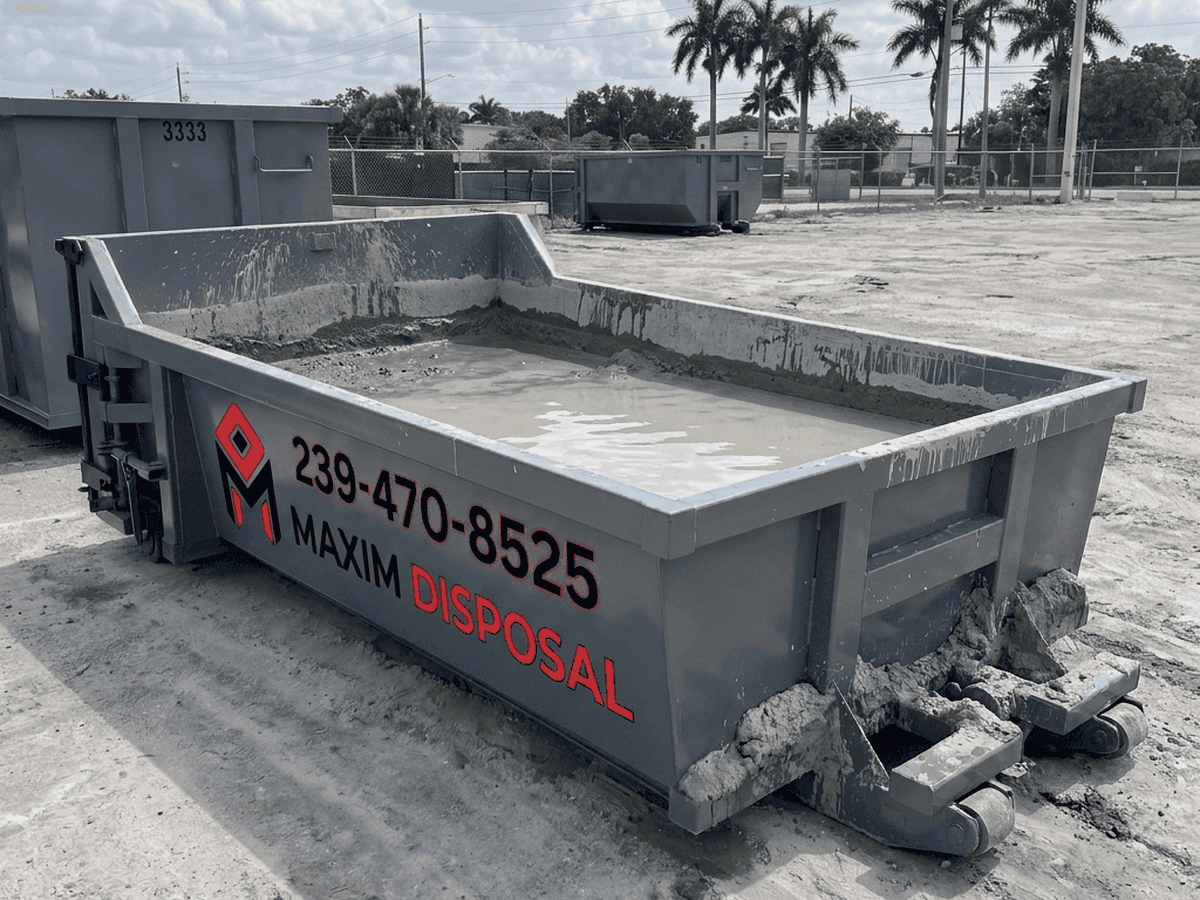
Not a debris can at all. Low-profile containment for pour days — it holds concrete rinse water so it never touches the ground, then leaves on a truck. Covered in full further down this page.
There is also a 20 yard concrete can. Same container as the 20 yard above, but it carries a 15 ton limit instead of a 2 ton allowance, because clean concrete goes to a recycling facility. Fifteen tons is roughly five to six inches of slab across a two-car driveway.
Limit and allowance are not the same thing. You can go over an allowance and settle up. A limit is a hard cap set by what the truck can legally carry.
Horticulture has its own allowances: 4 tons on a 20 yard, 5 tons on a 30. Brush loads do not behave like construction loads.
What These Loads Actually Weigh
Weight is the part people guess at, and guessing is what produces a surprise on the invoice. These are the numbers off our own scale tickets. They are averages, not promises — but they are real, and they will get you close.
Concrete — about 12 tons per 500 square feet at 4 inches thick
That is the most useful number on this page if you are doing demo. Work backwards from it: the 15-ton limit on the concrete can lands at roughly 600 square feet of 4-inch slab. A standard two-car driveway is usually in range of one can. A driveway plus a patio usually is not.
Thicker changes it fast. The same 500 square feet at 6 inches is half again as heavy. If you are near the line, call with the square footage and the thickness and we will do the math with you before anything gets loaded.
Shingle roof tear-off — about 3 to 4 tons for 20 squares
Twenty squares is 2,000 square feet of roof. Notice what that means against the allowances: a 20 yard includes 2 tons, so a typical 20-square tear-off will go over it. That is not a reason to avoid a 20 yard — it is a reason to know before you book, so you either size up to a 30 or you go in expecting the overage instead of finding it on the invoice.
Layers matter too. A tear-off down through two or three layers of old shingle weighs what two or three tear-offs weigh.
Horticulture — a full 30 yard runs around 4 tons
Brush lands inside the allowance almost every time. The 30 yard horticulture can includes 5 tons and a full one typically comes in near 4, which is why we very rarely write an overage on a brush load. It depends on the debris — wet material and green palm are heavier than dry limbs — but on this one the weight is not usually the thing to worry about. The volume is. Cut it down before it goes in.
Construction debris — this is the wide one
C&D is not one material, it is every material, and the spread is enormous:
| A 30 yard full of… | Typically weighs |
|---|---|
| Drywall, wet | 7 to 8 tons |
| A garage cleanout | 2 to 3 tons |
| Foam and insulation (20 yard) | Under 1 ton |
Same container, eight times the weight. A 30 yard includes 3 tons, so a garage cleanout sits right about at the allowance and a wet drywall load is well past it.
Wet is the word to pay attention to. Drywall, plaster and dirt all pick up water and hold it, and a load that sits open through a Southwest Florida afternoon can weigh substantially more at the scale than it did going in. If rain is coming and the can is holding absorbent material, covering it is worth the trouble.
If your job is not on this list, call and describe it. We have weighed a lot of these.
What Goes In Which Can
Construction and demolition debris. Lumber, drywall, roofing, tile, flooring, cabinetry, fixtures, packaging, general jobsite waste. Mixed loads are fine — this is the can that exists for mixed loads. Sorted and recycled on our end, and only a small fraction of what we haul reaches a landfill.
Concrete only. Concrete, block and brick. Nothing else. No wood, plastic, metal, dirt, roots or trash. Rebar is acceptable but adds $100. A clean load goes to the recycling facility at the concrete rate; a contaminated one gets reclassified as construction debris and we have to pass that cost through — so “concrete only” is worth taking literally. If your demo is producing concrete mixed with everything else, that is a C&D load and it should go in a C&D can.
Horticulture and yard waste. Limbs, palm, brush, hedge and tree work, storm cleanup, land clearing. No construction debris in a horticulture can — no lumber, fencing, treated wood, concrete or trash. It goes to a different facility, and a contaminated brush load stops being a brush load.
What we do not take at all. No hazardous material, no liquids, no paint, solvents, fuel, batteries, tires, appliances containing refrigerant, or medical waste. If you are unsure about something, ask before it goes in the can rather than after — it is a five-second phone call and it is a real charge if it shows up at the scale.
And a limit worth stating plainly: we do not do junk removal. We drop a container and we pick it up. Nobody arrives with a crew to carry things out of your house. If that is what the job needs, we are not the right call and we will tell you so on the phone rather than after you have booked.
Concrete Washout
This is the newest part of the business and the part Southwest Florida is thinnest on, so it gets more than a line.
If you are pouring, the rinse water has to go somewhere. The default on most sites is a pit dug in the dirt, and a pit is a stormwater problem waiting to happen. Concrete rinse water is highly alkaline. It does not stay where you put it, it moves with the first real rain, and at the end of the job the pit has to be dug out and hauled off anyway. You did the work twice and carried the exposure in between.
A container holds it. Then it leaves on a truck.
The 6.5 yard washout unit is low-profile with walls high enough for a real pour day, and a footprint small enough to sit near the work instead of at the far end of the site. That last part matters more than it sounds. The closer the unit sits to where the trucks actually are, the more likely crews use it instead of the nearest patch of dirt — and a washout container nobody walks to is not solving anything.
Access is the same as any roll-off: roughly sixty feet of straight-line room and clearance overhead.
If you are running pours across multiple sites or on a rotation, that is a different conversation than a single drop. Call and we will work out what the schedule needs.
Before the Truck Comes
Four things decide whether a delivery goes smoothly, and all four are on your side of the line.
Room. We need roughly sixty feet of straight-line space to set a can down and clearance overhead. The truck does not set the container sideways. On tree jobs the overhead part is the one that stops deliveries — low limbs over the drop spot will end the attempt.
A clear spot. Cars moved, gate open, nothing parked where the can goes.
Where it sits. On your own driveway or property, no permit. If it has to go in the street or the right-of-way, your city may want one, and the rules are different in Fort Myers, Cape Coral and the county. Tell us the address and where you want it and we will flag it if it is going to be a problem.
How it gets loaded. Heavy material low and flat. Keep the load level with the top rail so it can be legally tarped — a heaped can is one we cannot legally haul, and that turns into a second trip. Break down bulky items where you can.
Thirty days are included on every rental, so there is no clock pressure to load it badly.
Tell Us What the Job Is
The fastest way through all of this is a phone call. Tell us what is coming out — driveway, roof, remodel, tree work, a pour schedule — roughly how much, and where it is going. That is enough for us to size it with you.
Ask what a can costs and you get a straight number on that call, not a callback. You get the number before the can drops, and if anything changes — a heavy load, a damaged container — you hear about it when it happens.
Same-day is often on the table. Next day is rarely a problem.
Our Services
Four containers, four kinds of work. Pick the one that matches your material and we will size it with you on the phone.
Construction Debris
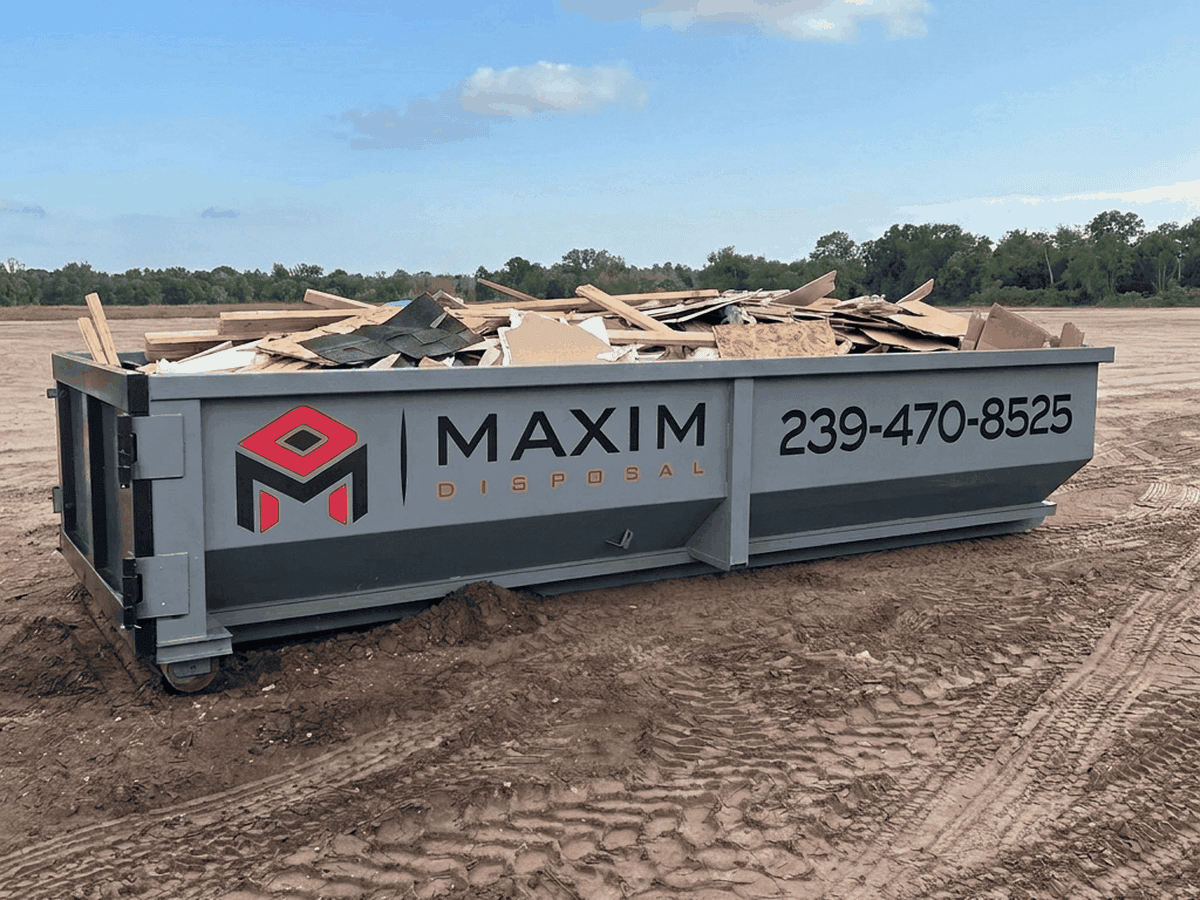
Mixed C&D for remodels, tear-offs, buildouts and demolition. 10, 20 and 30 yard.
Concrete Disposal
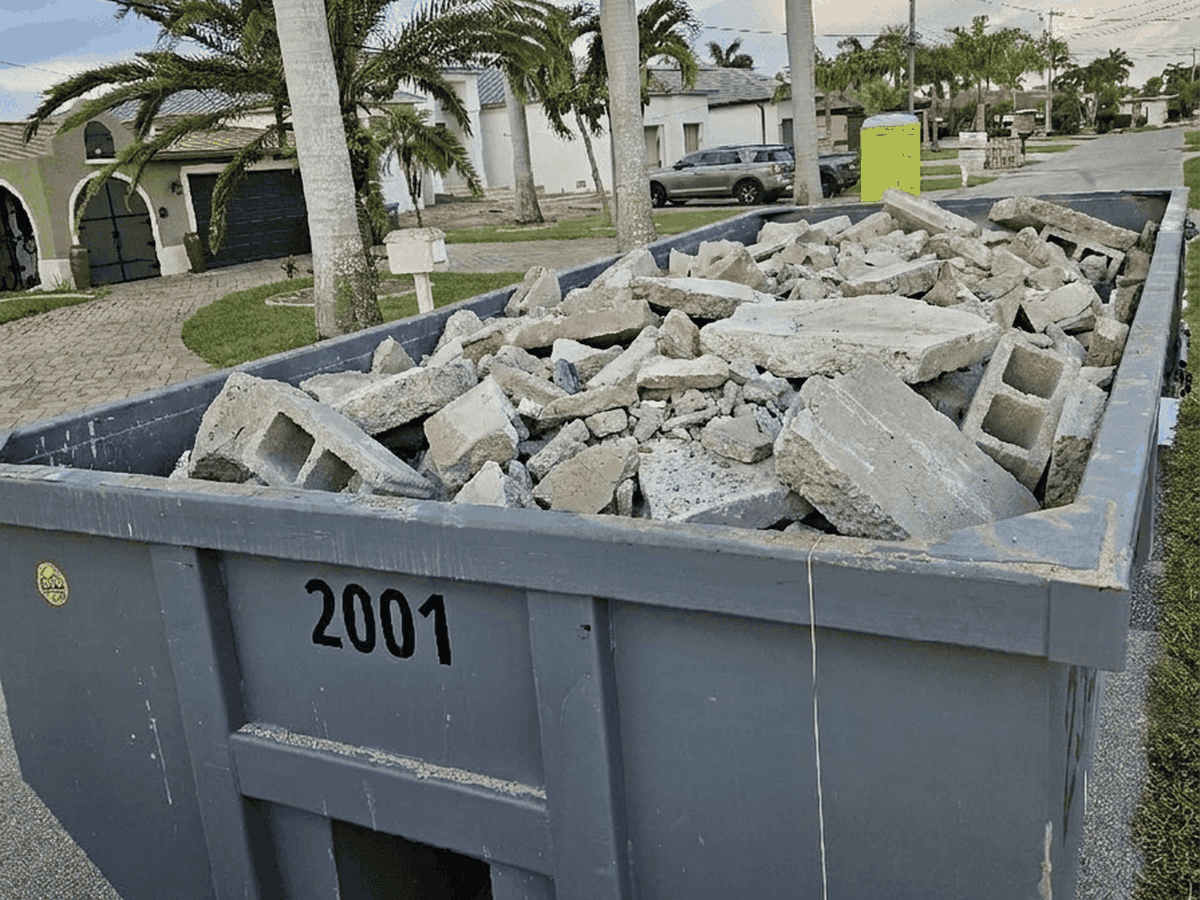
The dedicated concrete can — driveways, slab, sidewalk, patio, footers, block and curb. 20 yard, 15 ton limit.
Horticulture & Yard Waste
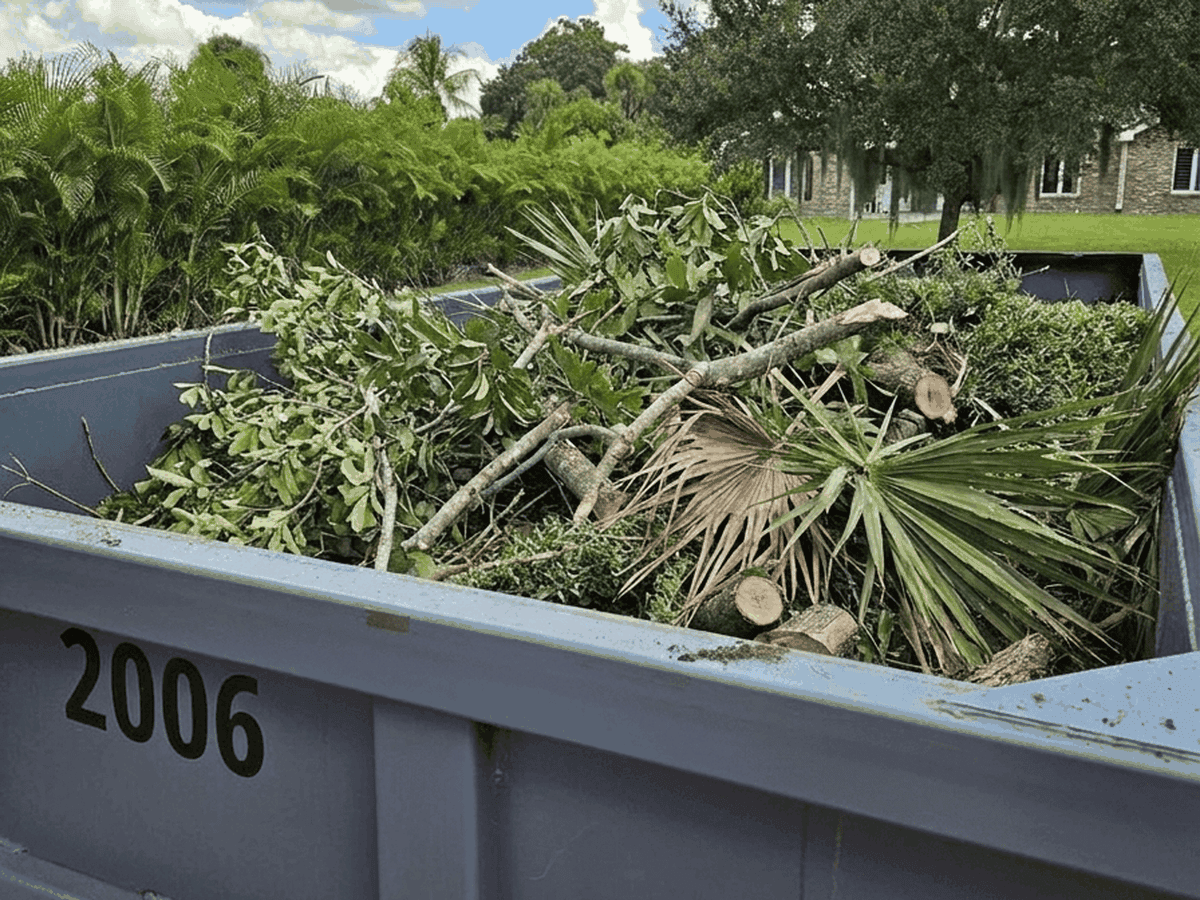
Brush, palm, hedge and tree work, storm cleanup and land clearing. 20 and 30 yard on their own allowances.
Concrete Washout
6.5 yard containment for pour days. Keeps rinse water off the ground and off your stormwater exposure.
Rates and the full fee schedule are on the pricing page.
Communities We Serve
Maxim Disposal runs roll-off containers across Southwest Florida, from Marco Island north to Sarasota.
Also serving North Port, Venice, Fort Myers Beach, North Fort Myers, Matlacha, Captiva, Buckingham, Lehigh Acres, Estero, San Carlos Park, Golden Gate, Marco Island, Bonita Beach, Immokalee, LaBelle, Babcock Ranch and Arcadia.